Pages

Saturday, January 9, 2021

Epidemic Goddess and the First “Tika”

It was a worship like no other. Amidst chanting of mantras and beating of drums and blowing of conch shells, the priest specially called for this ceremony would approach a child, make a small incision on her forehead and apply something he brought with him. The child would then be isolated and given cold food for the next few days. Women would draw alpanas/rangolis outside the room and often break into songs or stories related to the goddess they worshipped in this fashion.

As the child contracted mild fever they would celebrate the success of their effort – this was the surest sign that the child had been blessed by the deity. Over the next few days, this fever would subside and the child would recover. For the rest of her life, this goddess would protect the child and she would carry that mark, ‘tika’ on her forehead.

Goddess Sitala, rides on a donkey and holds a broom to ward off disease and a pitcher of cold water – Kalighat Patachitra

The special priest (often called ‘tikadar’) normally came from the lower castes like that of mali (gardener) or napit (barber) in Bengal and even when they were Brahman by caste, they were often lower in status. Working between November and early March, they collected pus from small pox patients, preserved it carefully in bamboo containers and then diluted it to apply on children in exchange of a fee.This was the unique ritual of goddess Sitala, the cold one, who promised to drive away fever (more specifically small pox and measles). From the Puranas, which described her as another form of Durga, who rose from a sacrificial fire along with Jwarasura (the demon of fever), she was celebrated in folk stories and medieval mangal kavyas of Bengal.

Taming Jwarasura

Till it was eradicated worldwide through vaccination in 1980, there was no cure for small pox. For centuries, small pox outbreaks killed millions globally. But it was known that the survivors of small pox did not contract the disease again. This observation led to the invention of artificially inducing immunity.  

The method of inoculation followed by the worshippers of Sitala is called variolation (from variola or Latin for pox). It appears from the descriptions of European observers in the 18th century that such inoculation was widely prevalent in Sitala’s home territories of North and Eastern India. But not so much in deep South, where goddess Mariamma takes over her role. Learning from Brahman practitioners in Odisha and Northern Andhra, British doctors started inoculating Europeans and Company soldiers in and around Madras in the late 1780s.

Variolation in China happened through blowing of powdered small pox material into nostrils

By the 17th century, apart from India this was a common practice in China (where the practice might have started around 1000 CE and we have documentary evidence from around 1600 CE) and large parts of Africa. Variolation might have originated independently in these three geographies or spread from one to another.

Lady Mary Montagu

Lady Mary Wortley Montagu, wife of the British Ambassador to the Ottoman Court in Istanbul in 1717 famously wrote a letter to her friend Sarah Chiswell in England describing variolation practice she witnessed in Turkey. Lady Mary, herself a victim of small pox, had her children inoculated and played an important part in spreading the practice in England.

Dr Zabdiel Boylston inoculating patients in Boston 1721 after Cotton Mather learnt about inoculation in Africa

Similarly after a devastating small pox epidemic in Boston in 1721, a Puritan Minister Cotton Mather promoted variolation – a practice he learnt from his West African slave Onesimus.

Goddesses of Plague

Sitala was not the first goddess of epidemic. Buddhist goddess of small pox, Hariti appeared in Gandhara around two thousand years ago. Buddhist myths say, Hariti (the name suggests someone who steals), was a child eating ogress but turned into a protector of children after coming into contact with Gautam Buddha.

Hariti Statue (Gandhar region - 1st-2nd century CE), her iconography was inspired by that of Greek Goddess Tyche

Between 165-180 CE, a small pox or measles epidemic killed 5 million people across Europe and Asia. In Roman history it was known as the Antonine Plague. At least three decades before that a similar plague ravaged the Kushan Empire, leading to a profusion of Hariti images in Gandhar region. Historians believe probably the same epidemic travelled to Europe through the Silk Route.

Gradually, Hariti transformed into both fever and fertility goddess and lived on for many centuries across the subcontinent. Her images have been found from Afghanistan to Rajshahi in present Bangladesh and also in Andhra. She even travelled to Japan as goddess Kishimojin.

Parnashabari - 11th century statue from Bangladesh, a small Sitala visible as her companion at the bottom right 

The other Buddhist fever goddess was Parnashabari. Her name literally means leaf-clad tribal lady. She was popular in Vajrayana/tantric Buddhism in Eastern India. Interestingly Sitala initially appeared as her companion. Her cult gradually disappeared or ceded ground to Sitala but even now she lives on as a goddess in Tibetan Buddhism

In the absence of any effective treatment, it was normal all over the world to invoke deities for relief from dreaded diseases. Bengal is still dotted with temples or areas marked after Sitala or such other deities like Olai Chandi or Ola Bibi (for Muslims) for cholera, goddess Raktabati for blood infection and Ghe(n)tu for skin disease.

But Sitala is different from all other deities in the sense that her worshippers tried to address the disease through scientific intervention.

Variolation to Covid Vaccine

English physician Edward Jenner (1749-1823) is considered the father of vaccination. On 14th May 1796, Jenner inoculated (he took pus from cow pox blisters of a milkmaid, Sarah Nelmes) his gardener’s 8 year old son James Phipps, who had mild symptoms for a few days but recovered soon. Small pox did not have any effect on Phipps during subsequent inoculations.

Edward Jenner

In rural England, many people noticed that dairymaids did not suffer from small pox and that led them to think about a possible connection between cow pox and small pox. We know at least two cases before Jenner (Benjamin Jesty in England in the 1770s and Peter Plett in Germany in1791), where similar methods were used to inoculate a few. But the credit for scientifically pursuing it and convincing people for vaccination goes entirely to Edward Jenner (the word vaccine came from “vacca” – Latin for cow).

In 1879, Louis Pasteur came up with the first laboratory-made vaccine (for chicken cholera). Since then vaccines for polio, tetanus, MMR (measles, mumps, rubella) and other killer diseases have revolutionized not only medical science but also human history.

From those early days of inoculation by Sitala worshippers to the latest Covid vaccines, technology has changed immensely but the essential approach - of inserting weakened antigens to trigger immune response - remains the same. And the legacy of early small pox inoculation is preserved through the continuous use of the word ‘tika’ in Bengali, Hindi and several other Indian languages. 

Saturday, July 4, 2020

Biscuits: An Indian Love Story


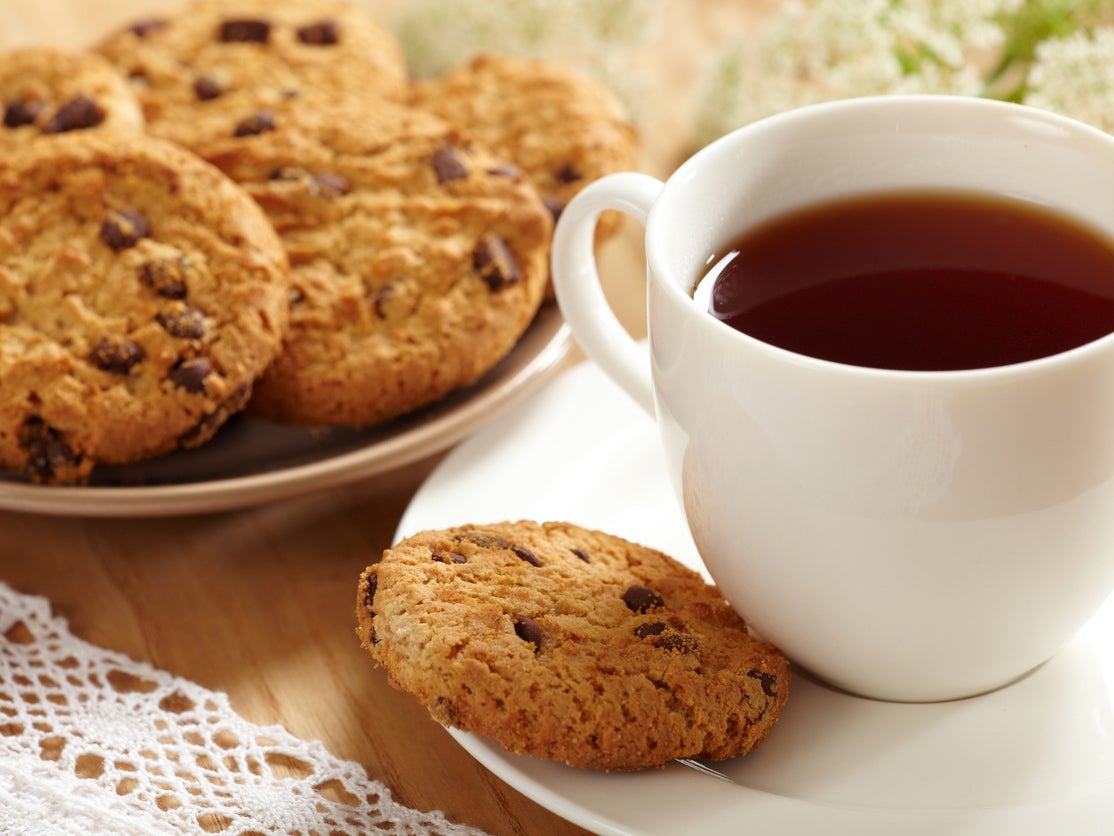
The best biscuit for dunking into tea revealed | The Independent

What is the item we all have consumed most during the lockdown (other than broadband)? Well, India in any case, is the largest biscuit-consuming nation in the world and we just raised the bar even higher. Less than a year ago (August 2019), the makers of India’s most favourite biscuit said that the economic conditions had deteriorated so much that they were struggling to maintain the sales volume of even Rs 5 pack of Parle G. And in April this year, amidst lockdown, Parle G recorded its highest ever sales!

Best rusk | Milk Rusk | Britannia Rusk | Bonn Rusk
Baked left-over breads were the first biscuits - we now call them rusk

Have you ever wondered about the history of this humble yet indispensable snack?  The word ‘biscuit’ came from a French word (bis-qui), which, in turn, had originated from a Latin word (biscotus) – it basically means ‘twice baked’. There is no doubt that at least since the Roman times, people had been baking the left-over bread again to preserve it. This is what we call rusk today. This was handy for the soldiers and long-distance travellers.We know for sure that since the time of the Crusades (1096-1271 CE), European armed forces, especially navies, had been stocking up on biscuits. For more than two centuries, till around 1840 (when canned beef was introduced), the standard ration of the British Navy had two fixed elements – biscuits and a drink, first beer and later rum. But these were hard (and quite inedible) biscuits, which had to be dunked in some liquid first. These came to be known as hard tack biscuits. The oldest preserved biscuit today is one such naval issue from 1784. 

13th April 1784 - the oldest surviving biscuit in the world - today preserved in Britain's National Maritime Museum. A hard tack biscuit given to wood engraver Thomas Berwick

Today it is difficult to imagine that hardly 150 years back biscuit was an absolute novelty for Indians. Just like bread, it was the Portuguese, who introduced biscuits in Bengal (and perhaps in Goa/Western Coast also). The first known reference to biscuits made in Bengal came from the famous French traveller and jeweller, Jean Baptiste Tavernier (1605-1689), who wrote in the 1660s that the port of Hooghly was a good place to stock up on biscuits for return journey. For the next 100 years or so, the bakeries of Portuguese-influenced Hooghly, of Dutch Chinsurah and French Chandannagar remained the main suppliers of bread and biscuits to Calcutta.


Rajnarayan Bose, ;eading intellectual of his generation and maternal grandfather of Sri Aurobindo - when he joined Brahmo Samaj in the 1840, celebrated the event with biscuits and sherry with his friends - having biscuits openly was an act of rebellion for them

The first commercial bakeries in Calcutta came up near the dock area and Khidirpore. These bakeries were run by the Portuguese/people of European descent first and then by Muslims. Right from the beginning, the majority population of the city that is Bengali Hindus, found both bread and biscuits irresistible in taste but these remained forbidden food items for long. In the 1840s, when a young Rajnarayan Bose (1826-1899) – one of the most famous intellectuals of his generation and maternal grandfather of Sri Aurobindo – took the oath to join the Brahmo Samaj, he celebrated it with his friends by sharing biscuits and sherry!! It was an act of revolt for them. Revolutionary leader, Bipin Chandra Pal (1858-1932) recalled in his autobiography that in his childhood it was an exciting adventure to buy bread and biscuits from the only shop (that too Muslim-owned) selling these items in Sylhet town and to consume it at night once the entire household was asleep.


Here ITC To Boroline: These 7 Iconic Brands Were Started In West ...
By the 14th century, biscuits were well-known in England. However, from the 17th century, British slave trading and subsequent sugar plantations in the West Indies powered by slave labour made sugar easily available and affordable. This completely revolutionized British baking – soon there were great variety of cake and biscuits for every occasion. From the 18th century, tea, especially afternoon tea, became almost a British ritual and biscuits found a pride of place there.

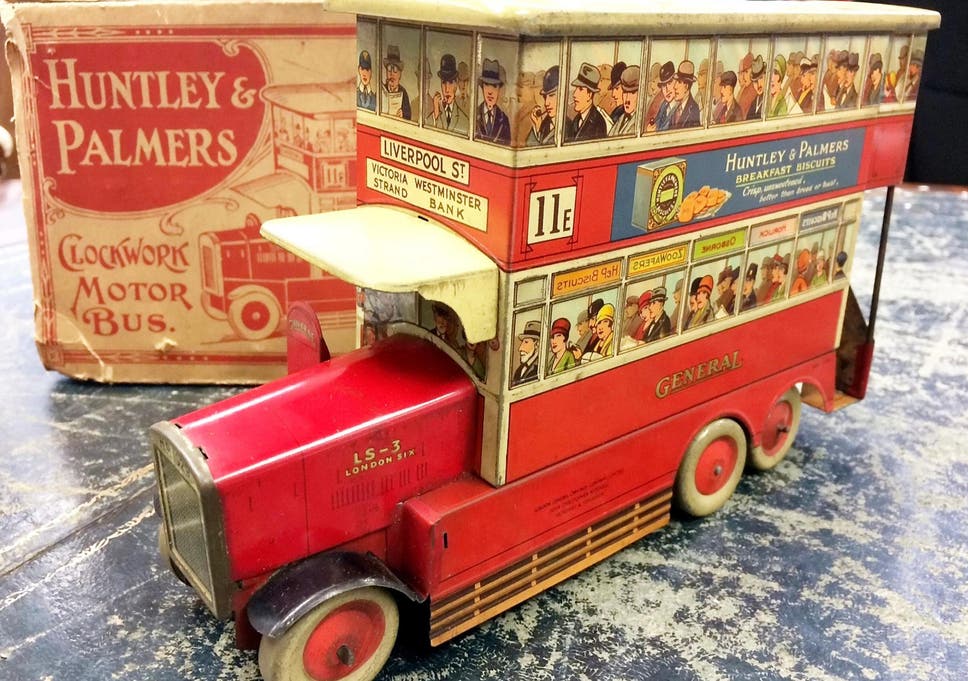
Biscuit tin forgotten for 25 years found to be worth £1,500 | The ...


In the 19th century, with the growing popularity of tea and travel, a variety of easily consumable biscuits came to be manufactured in Britain. The company, which represented the best of this tradition and one of the first global brands – Huntley Palmers – started their operations in Bristol in 1822. By 1900, their products, perfectly preserved in beautiful tin boxes were to be found all over the world from Tibet to heart of Africa and from North Pole to New Zealand. 

Grand Duchess Marie Alaxandrovna with her husband Prince Alfred
For some time in the second half of the 19th century, biscuits enjoyed a golden period. When Queen Victoria’s second son, Prince Alfred in 1874 married Tsar’s daughter Grand Duchess Marie Alexandrovna, one of the leading British biscuit manufacturers, Peek Frean, created a special biscuit called ‘Marie’.


Pelitis Restaurant - The Legend of the Lost
Federico Peliti opened Calutta's first stand alone fine dining restaurant with an in-house bakery in 1881
Back in Calcutta, there were more respectable options for the British now as hotels like the Wilson’s started their own bakeries. In 1881, Federico Peleti opened Calcutta’s first upmarket standalone restaurant along with an in-house bakery. However, the problem persisted for the Hindu upper caste till 1887, when a Bengali gentleman named Girish Chandra Mandal and I do not know anything else about him – opened a biscuit manufacturing unit in Central Calcutta. Soon the business grew so fast that he had to request his neighbour Nalin Chandra Gupta, a lawyer by profession, to help him out. Their venture was known as VS Brothers. Soon Mr Gupta came to be the driving force behind the venture. The company was renamed Gupta and Company and they set up a much bigger unit at Dum Dum and started selling biscuits under the brand name of ‘Hindu Biscuits’. As you can well imagine, during the Swadeshi days (1905-11), the company did roaring business.

In 1913, again under what circumstances I have no clue, this company took on board an English gentleman by the name of C H Holmes and subsequently it was renamed Britannia Industries during the First World War (1914-1919).


Britannia Marie Gold, 250g: Amazon.in: Grocery & Gourmet Foods

In 1970, three major British biscuit makers - Huntley and Palmers, Jacobs and Peek Frean amalgamated to create Associated Biscuits. This Associated Biscuits held a major stake in the Britannia Industries. Now you know how your tea time favourite Britannia Marie came about - traversing the channels of colonial commerce (in 1982, Nabisco acquired Associated Biscuits and in 1989, Nabisco sold the Associated Biscuit brands to Danone; Britannia today is majority owned by Danone and their Indian partner Nusli Wadia).  


Parle Performance Boost Amid Coronavirus Crisis | HW English
World's best selling biscuit - it's an emotion, an identity to millions of Indians
Parle G is not just a biscuit but as it trended in twitter recently, it is an emotion and an identity of our rootedness. Many of us would remember the original ‘Swad bhare Shakti bhare’ Parle G campaign with a dadaji and his grandkids from the 1980s. With sales of more than 5000 crore for this single product, this is the highest selling biscuit in the world. Parle Products baked their first biscuit in the village of Parla, near Bombay in 1939 and right from the beginning branded itself as a swadeshi product (bharat ka apna biscuit).

Frontier Biscuits, Surat - Restaurant - Surat, Gujarat | Facebook ...

In most cities of Punjab and North India, still there would be at least one National Bakery, producing old style biscuits and other savouries. I do not know much about them but I am quite sure that their origin was also somewhat like the Hindu biscuits in Calcutta. Frontier Biscuit, today well known for premium eggless biscuits in North India, was established in West Punjab in 1921 and probably came from the same tradition.

In every major airport today, you will find Hyderabad's Karachi Bakery selling famous Osmania biscuit
West Bengal is one of the top biscuit-consuming states (of course along with Maharashtra, home of Parle G) and Calcutta continues to be the biscuit capital of India. Britannia, ITC and Priya – three leading Indian biscuit manufacturers are based in Calcutta today. As the famous Irani chai of Hyderabad is intrinsically linked with sweet and salty Osmania biscuits, similarly, roadside tea stalls in Calcutta sell an enviable range of local bakery-produced biscuits. 


Some of these are rusk (the famous lero biscuit, to be dunked in steaming hot tea, served from a large brass kettle into your earthen cup), biscuits flavoured with kalo jire (onion-seeds) or the all-time favourite, projapoti (butterfly) biscuit (I just discovered that there is a recent Bengali film by that name). 


Projapoti Biskut (Bengali) - Box Office, Cast, Budget & Reviews

These biscuits taste somewhat different from the regular ones – I am not sure why. My friend and food blogger, Ranjini tells me, perhaps because they use dalda. 


We have surely come a long way since those days when having biscuits could pose risk to one's religion and also the romance of Huntley Palmers, but our love affair with biscuits continues to deepen. 

Friday, June 5, 2020

Half the Sky: Women in Lockdown


WFH meant both work-from-home and work-for-home
As the nationwide lockdown began, a complete disappearance of maids plunged middle class households into an unprecedented crisis. For most working women, WFH soon came to mean both work-from-home and work-for-home. A friend told me that her husband’s main contribution (during normal times) used to be the regular grocery and veggie shopping and now he was just doing the dishes. As she was praying for an early return of her maids, she was right in thinking that a disproportionate burden of household work had fallen on her.

2001 Nobel laureate in economics, George Akerlof famously showed that when men do all the outside work, they contribute on an average 10% to the household work. But when their share of outside work falls, their share of housework never rises to more than 37%.

In fact, Indian women were not alone in their misery, it was widely reported that during the lockdown, domestic violence has shot up globally. Since long ago I read something about the condition of women during the Great Depression, I decided to check out how their successors are dealing with the worst recession since then.


In recession, generally most job losses happen in male-dominated manufacturing and construction. However, due to social distancing, this time a huge number of jobs were lost in close contact professions and women dominate such jobs. 92% of dental and medical assistants, 89% of home health aides, 89% of hair stylists, and 80% of manicurists in the US are women. This is in addition to the job losses in education, retail, hospitality etc where women have significant share too. Overall, 60% of those who lost their jobs in the first two months were women. This has been particularly hard for 15 million single mothers, many of whom worked part-time and were the first to lose their jobs. As schools and day care centres remained closed, it has put more demand on working women.

Great Depression for American women, on the other hand, was a catalyst for positive change. During the First World War, just a decade prior to the Depression, they gained entry into formal employment. Apart from teaching, they took up jobs in sales, as office secretaries, telephone operators and as clerks – soon these came to be known as ‘lace-collar’ jobs. During the Depression, at times their salaries were cut but mostly they managed to hold on to their jobs. But massive job losses in manufacturing adversely affected a very large proportion of working men. As a result, women became the primary earning member for many families.
Underpaid but employed, American working women in the 1930s

Between 1930 and 1940, the number of US women working outside their home actually increased from 10 million to 13 million. Far from looking at it as a progressive step, the contemporary American society blamed them for robbing men of much-needed employment. Today it appears impossible to believe but the US government had a formal policy of not giving women any employment under the New Deal. And the government refused to change this policy of completely banning women from public employment programmes despite protests from the first lady, Eleanor Roosevelt.
Even as they managed to improve their position outside, within the household, it created new friction. Losing their traditional status as the sole breadwinner, husbands started feeling insecure. This insecurity put a serious strain on marriages and family life became more acrimonious. Though they spent more time together but to cut cost, American families took to contraceptives in a big way. Household budgets were limited and at times, people lived in extended families. Women tried hard to save money by every possible means – sewing clothes for family, preserving fruits etc. And of course they had to do most of the cleaning and washing too.

World has moved a long way since the Great Depression but still a recession is more difficult for women than men. And this is because they continue to share higher burden of family/household work and in general, they face more difficulties outside and get paid less. And this is true across the world.


In fact Akerlof is not alone, economists and social scientists have been trying for a long time to understand why despite rising education and employment levels, women still continue to do more household work than men (when both have equal stake in efficiently running the house). A number of empirical studies show that not more than 10-30% women prefer home over career by nature (don’t go by matrimonial ads) and an equal proportion of women prefer career over home. So most women take up additional household work because either they feel more responsible for running the household or they simply want to avoid friction.

Another friend, when she moved to the States many years back, noticed that the second generation Indian girls were generally reluctant to marry boys from their own community and the reason was not difficult to find. How much house work guys share that is also a cultural trait (Indian women do more unpaid domestic and care work than women of any country, except Kazakhstan). But things do change. In the West, even in the 1970s, men did almost no housework. Today they do a lot of cleaning and cooking though child care remains almost exclusively women’s responsibility. Outside home, women’s work is far better recognized today but parity eludes them even in the USA – for every one dollar a man earns, a woman earns only 81 cents.
This lockdown has taught middle class Indians the value of household chores. Respect for maids has gone up considerably. A number of friends have promised to enhance their salaries. I do not know how many will keep that promise but definitely we are going to buy more robotic vacuum cleaners and such gadgets. A whole range of new cooks – more men but quite a few women too – made their kitchen debut recently. I guess a few are going to stick around as some men would remember their promise of helping their wives even after the lock down ends. 
We know, cataclysmic events like the two World Wars and the Great Depression have fundamentally altered the traditional gender equation in the West. Will this lockdown prove to be a similar turning point for Indian middle class women?